Monday, October 31, 2016
Foley: History
History
The History of Foley is often liked to Jack Foley who is essentially the founded of this art form. So how did foley come about...
Foley first came about as a range of live sound effects originally developed for live broadcasts of radio drama in the early 1920s in various radio studios around the world.Due to no effective recording method existed in those days, all sounds for radio plays had to be created live at the time. This is where Jack Donovan Foley comes in as he was working at Universal Studios in 1914 during the silent movie era.
When Warner studios released its first film to include sound which was The Jazz Singer Universal knowing that they needed to stand a chance against Warner Studios called for any employees who had radio experience to come forward. This lead Foley became part of a sound crew that turned Silent movie Show Boat into a musical. Due to microphones of the time being unable to pick up anything other than dialogue,other sounds had to be added in after the film was shot.
This lead Foley and his small crew to projected the film on a screen while recording a single track of audio that captured their live sound effects. Timing of these sounds had to be perfect, meaning footsteps and closing doors had to be synchronized with the actors' motions in the film, this started the art we know as Foley today.
Jack Foley created sounds for films until his death in 1967, with some of his methods still being used today.
Modern Foley art has progressed in the same manner as recording technology has progressed. In today's world, sounds does not have to be recorded live on a single track of audio. They can be captured separately on individual tracks and carefully synchronized with their visual counterpart, with Foley studios employing hundreds of props and digital effects to recreate the ambient sounds of their films.
Foley: What Is It
For my minor project i will use sound (Foley) as my primary basis meaning Foley work will act as my foundation for my project and will make up all of my example for the project.
So what is Foley:
Foley is the recreation of sound effects that are added into film, video, and other media during post-production to enhance audio quality. These sounds range from squeaky doors and breaking glass to the swishing of clothing or people's foot steps. It is stated that the best foley art should go unnoticed by the audience as it helps create reality within a scene, mainly due to without these background noises the films will feel unnatural and quiet.
Foley Artists are also responsible with creating ambient sounds as most props and sets in film usually do not sound anywhere close to how they should in real life.Foley sounds are used to enhance the auditory experience of the movie.
Another use of Foley is it's use of covering up unwanted sounds that are made on set of the film such as Airplanes and unwanted traffic.
The term "Foley" is also used to describe a place, such as Foley-stage or Foley-studio, where the Foley process takes place.
Foley: Common Tricks
Common Tricks:
During Foley sound artists have similar tricks in creating similar sounds, tricks that I may use in my project which are
- Corn starch in a leather pouch makes the sound of snow crunching
- A pair of gloves sounds like bird wings flapping
- An arrow or thin stick makes a whoosh
- An old chair makes a controllable creaking sound
- A water soaked rusty hinge when placed against different surfaces makes a creaking sound. Different surfaces change the sound considerably
- A heavy staple gun combined with other small metal sounds make good gun noises.
- A metal rake makes the rattle/squeak sound of chain-link fence (it can also make a metallic screech when dragged across a piece of metal).
- A heavy car door and fender can create most of the car sounds needed but having a whole car in the studio is better.
- Burning plastic garbage bags cut into strips makes a realistic sounding candle or soft non-crackling fire when the bag melts and drips to the ground.
- ¼” audio tape balled up sounds like grass or brush when walked on
- Gelatin and hand soap make squishing noises
- Frozen romaine lettuce makes bone or head injury noises.
- Coconut shells cut in half and stuffed with padding makes horse hoof noises.
- Cellophane creates crackling fire effects.
- A selection of wooden and metal doors is needed to create all sorts of door noises, but also can be used for creaking boat sounds.
- A heavy phone book makes body-punching sounds.
- Acorns, small apples and walnuts on wooden parquet surface can be used for bones breaking
- Canned dog food can be used for alien pod embryo expulsions and monster vocalizations
Sound effects :Tricks
Similar to foley, sound effects have some tricks that are easy to recreate. The following examples are ideas from sound effect artists
Airplane engine, flying (WW2 style)
Get some of the larger fan types into your studio and record different speeds and power up/downs, close miked. You’ll have to add some distortion and remove some of the lower end depending on the type of fan used. Jonathan vd Wijngaarden
Alien egg sacks
A good one for alien egg sacks contracting and expanding is breathing softly into a styrofoam cup while pressing it in and out.– Pedro Seminario
Alien pod embryo expulsions etc.
Certain kinds of canned dog food make useful sounds as the food comes out of the can. The chunky stuff isn’t so good, but the tightly packed all-one-mass kind makes gushy sucking sounds when the air on the outside of the can is sucked into the can to replace the exiting glob of dog food. This sound can be used as an element in certain kinds of monster vocalizations, alien pod embryo expulsions, etc.– Ashley Walker
Arrow flyby
Use a thin bamboo stick, such as the type used to hold up plants in a garden. Whip it past the microphone.
– Adam Johnson
– Adam Johnson
Boulder rolling
Car rolling downhill on gravel without engine running – record the wheel friction.
– Ben Burtt
– Ben Burtt
Bullet, slow-motion
Record the spout of a ’70s coffee percolator.
– Brian Chamberlin
– Brian Chamberlin
Car engine
If you need a car engine sound, buzz into a brass mouthpiece – (tuba/baritone) or bassoon reeds – and pitch shift it down.
-Ellen Lurie
-Ellen Lurie
Chainmail movement
A bunch of keys for chainmail movement.
– Patrick Phelan
– Patrick Phelan
Driving on snow
Flour – great for walking/driving on snow.
– Mark Estdale
– Mark Estdale
Gore and squidge
Wet wash leather – fantastic for gore and squidge.
– Mark Estdale
– Mark Estdale
More sound effects and techniques can be found here http://www.epicsound.com/sfx/
Thursday, June 30, 2016
Documentary: Future
Like everything over time it will change and develop, documentaries are no difference so what does the future hold for documentaries well ive looked at many different theories and placed the most interesting ideas into this post.
Better, faster, smaller:
Camera technology is developing rapidly, and the emphasis
has long been better quality cameras in smaller packages. This is particularly
important to documentary filmmakers, where mobility is key. In the past
documentary makers and video journalists have often been forced to compromise
quality for mobility, or vice versa. However, the rise of “run n’ gun” cinema
cameras in recent years has changed the game, particularly with high budget
documentary filmmakers who now use digital cameras. There are also speculations
that Canon have set a goal of having 8K for all their DSLRs by 2017. Not only
will this lead to more cinematic-style documentaries in future, but may also
help produce films that are more intimate, unobtrusive and vivid.
Rise of the Drones
The “must-have” toy for independent filmmakers. Commercial
Drones, Quadcopters, UAVs, whatever you want to call them, are fast becoming
part of the documentary filmmaker’s inventory. Almost 9% of our “cost of docs”
survey respondents said they had used drone footage in their latest
documentary, and this looks set to increase with latest estimates predicting
the value of the small drone market to hit $10bn by 2020.
Virtual Reality
Documentary can often be interrupted as seeing something
through the filmmaker's eyes, the future could be literal seeing through their
eyes which will give a closer connection with the audience. While on the
filmmakers side its means that they have to rewrite themselves to make vr work
and film in vr as well, while work has not be scheduled its safe to guess
that's the next big milestone in not only
documentary making but filmmaking as a whole.
So that is three possible ways for the future of
documentaries, while their isn't large information out there i feel that this
is at least an understanding of what could happen
Wednesday, June 29, 2016
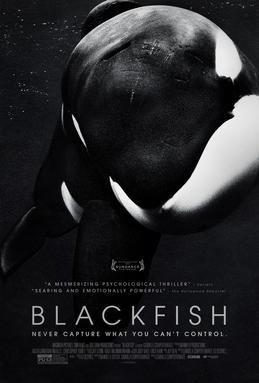
Documentary: Blackfish

Why this film?:
Some documentaries and films stay with you long after watched them and Blackfish is no exception. Blackfish for want of a better word hits you in the face with how aggressive and how hard it is. Blackfish details the chronicles of seaworld Orcas particularly Tilikum and the danger of captive Killer Whales something i wasn't aware of, what this film does is opens your eyes to what might go on at Seaworld and parks similar granted i am aware that documentaries can present something one way when its actually another, and Blackfish has been known for its controversies but that never impacts what the film does which is to tell you that this thing is happening whether you know about or care about and it lets you know why you should.
What i will take away from this:
People have described Blackfish as "a gripping example of documentary film making at its finest" and it truly feels like it is, so what will i take away from this i guess its sometimes being controversial works in your favour as it can get people talking good or bad about your documentary. Another reason and most important in my mind is to push boundaries because it gets people into the debate if there's one to be had and it address issues and makes people think about things that may never have crossed their minds.
Monday, June 27, 2016
Documentary: Trekkies
Why this film?:
Like alot of fan driven documentaries Trekkies walks a thin line between a joke and a celebration, while in one camp they can say the fans are abit on the extreme side while in the other camp most of the fans are productive and happy in their 'obsession'. Trekkies is a documentary with heart which i guess is something I connect with in film which is why i connected with this as it filled with tons of heartwarming and heartfelt moments such as the actor who played Scotty talking a fan out of suicide or fans falling in love due to their fandom. Trekkies also does something other fandom documentaries don't and that's to show weirder and sometimes darker aspect to fandom such as sexually explicit art or slash fiction. Another unique feature of the documentary is that its accessible to no fans as well, but one thing i picked this film is that it teaches that you should love what you love and not be ashamed
What i will take away from this:
What i will take away from this film is to have a humour when your making documentaries if they have a similar idea such as fandom have a humour not everything has to be serious but must importantly what I will take away from this film is to let audiences to decide on how to feel and to have fun when they do.
Subscribe to:
Posts (Atom)