Sunday, April 30, 2017

Script Godly: Monkey King


Image result for Monkey King

Overview:  When I was looking into Chinese Pantheon and Mythology in general, I wanted my main character Danny to be someone who people were aware of and that also was interesting character wise and writing wise. I was excited when I found the Monkey King as firstly I knew the character and he fit was I was Looking for.

Note The following is notes and research I gathered about The Monkey King so which I will try to include in my script.

Name: Sun Wukong, also known as the Monkey King

Pantheon: Chinese 

Deity Type: Trickster/Magic God.

Abilities: Immortality, 72 Di Sha transformation, Jin Dou Cloud, Unbreakable Body, Eye of Truth.

Weapons: Ruyi Jingu Bang (magical staff) Translated as: "The Compliant Golden-Hooped Rod,"

Research/Background: Only like other gods that I will use for my characters The Monkey King is actually a character from literature more specifically 16th century Chinese classical novel Journey to the West. While he is one of most enduring Chinese literary characters, his origins go back to the White Monkey legends from the Chinese Chu kingdom (700–223 BC) which in turn gave rise to stories and art motifs during the Han Dynasty (206 BC – 220 AD).

Sun Wukong was initially developed as a Taoist immortal before being incorporated into Buddhist myths. As referenced in Hera S. Walker paper, "Indigenous or Foreign?: A Look at the Origins of the Monkey Hero Sun Wukong,". The paper also talks about the belief by some scholars to be influenced by elements of both Chinese folklore and one particular Hindu Deity called Hanuman god of Devotion, Power, Humanity, Protection, Discipline.

Here is an image of Hanuman (On The Right) compared to an image of Sun Wukong (On The Left).


Lord hanuman singing bhajans AS.jpgXiyou.PNG


Script: Godly Pantheon.


Image result for pantheon gods

For one of my scripts the idea of gods still existing in a modern world that I have had for awhile so I decided to use this post to detail what Pantheon's i'm looking to use for my script but as if I ever come back to the idea and story after i've finished the script.

  • African pantheons

  • Armenian pantheon

  • Aztec pantheon

  • Berber pantheon

  • Canaanite pantheon

  • Celtic pantheon

  • Chinese pantheon: 
  • For my main character I wanted to him to be obviously a reincarnated but I didn't what him to be one of the gods from one of the most used pantheons, I also had imagined a scene where my main character would have a fight seen with martial arts skills so my mind came to him being a member of the Chinese Pantheon.

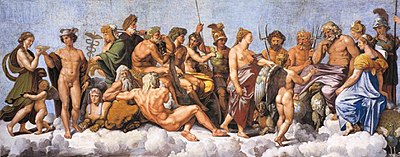
  • Divine Council: In normal mythology the divine council  is any high ranking god in any said mythology i.e. Zeus preside over the greek divine council etc. In my idea the divine council are the only god's that are too powerful to be reincarnated and remain in god form. These gods are Zeus ( Greek God of the sky, lightning, thunder, law, order, and justice), Odin (The Allfather/ Norse), Pachamama (Inca Goddess of Earth), Nut (Egyptian Goddess of the Sky and Heavens), Amaterasu (Japanese Goddess of the sun), Igaluk ( Inuit Lunar God), Varuna (Hindu God of the SeaOceanTermites,ScorpionsEels and Water), Mors (Personification of Death)
  • Egyptian pantheon

  • Germanic pantheon

  • Greek pantheon

  • Guanche pantheon

  • Hindu pantheon

  • Incan Pantheon

  • Japanese pantheon

  • Japanese Buddhist pantheon

  • Mayan pantheon

  • Native American pantheons

  • Norse pantheon

  • Rigvedic pantheon

  • Roman pantheon

  • Slavic pantheon

  • Sumerian pantheon


  • Tuesday, November 8, 2016

    Future Of Sound Design


    What is The Future?

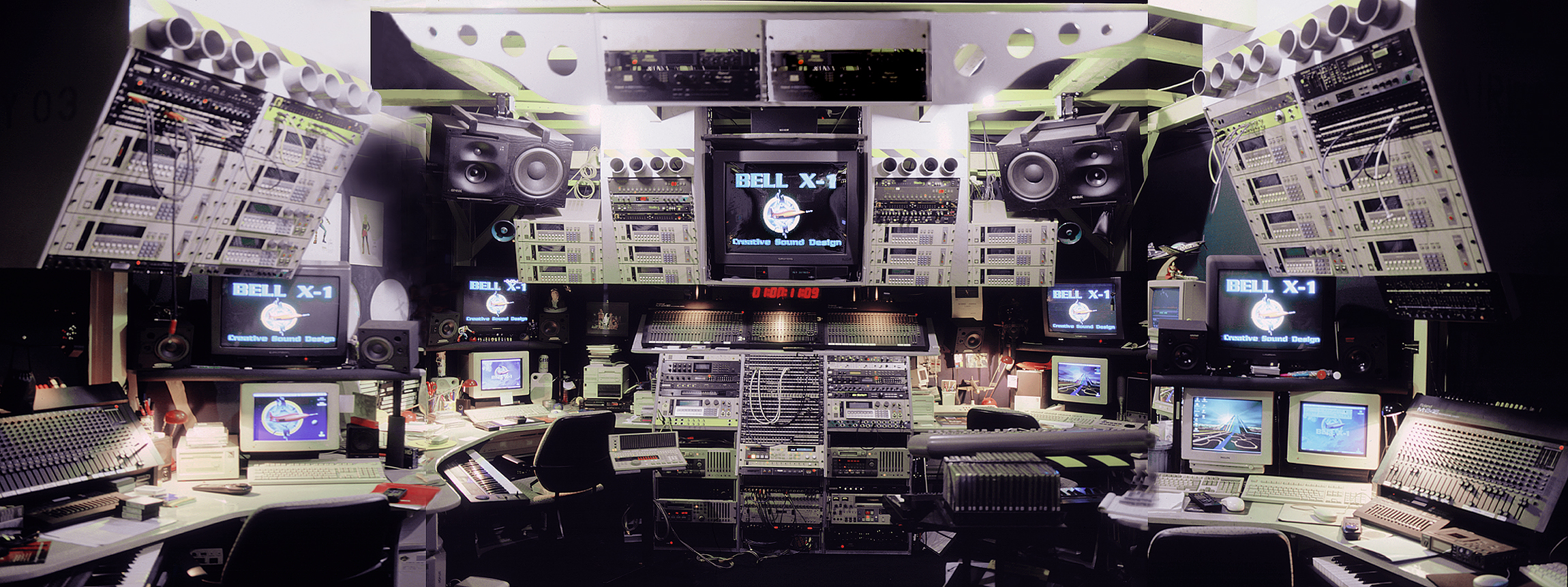
    MIDI and digital audio technology helped to drive the rapid evolution of sound design during the 1980s and 1990s. Features of computerized theatre sound design systems were recognized as being essential for live show control systems at Walt Disney World and, as a result, Disney utilized systems of that type to control many facilities at their Disney-MGM Studios theme park, which opened in 1989. These features were incorporated into the MIDI Show Control (MSC) specification, an open communications protocol used to interact with diverse devices. The first show to fully utilize the MSC specification was the Magic Kingdom Parade at Walt Disney World's Magic Kingdom in September, 1991.

    Also, the World Wide Web has greatly enhanced the ability of sound designers to acquire source material quickly, easily and cheaply. Nowadays, a designer can preview and download crisper, more "believable" sounds as opposed to toiling through time- and budget-draining "shot-in-the-dark" searches through record stores, libraries and "the grapevine" for (often) inferior recordings. In addition, software innovation has enabled sound designers to take more of a DIY (or "do-it-yourself") approach. From the comfort of their home and at any hour, they can simply use a computer, speakers and headphones rather than renting (or buying) costly equipment or studio space and time for editing and mixing. This provides for faster creation and negotiation with the director.

    Take all of this into account its safe in my opinion to assume that the internet will play a huge factor in how sound design is used in the future as like it's been said it allows software to be gathered quickly but also allows for the quick distribution of these sounds and also the gathering of sounds inaccessible in climates that can't access them.

    Use Of Sound in Film: Star Wars Saga


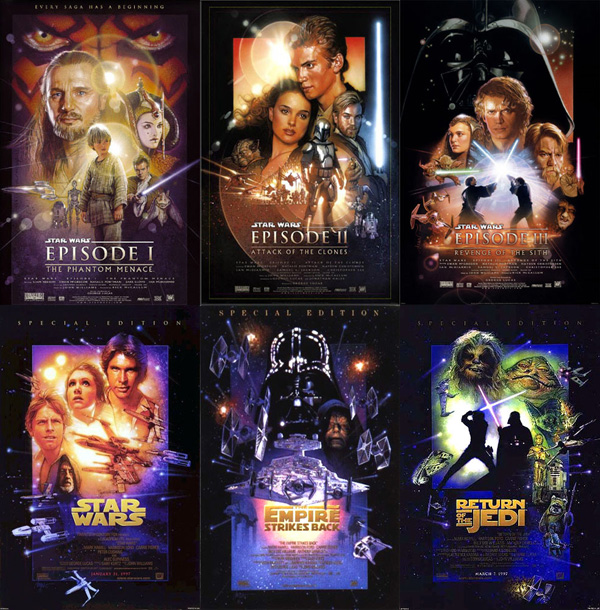
    When i was coming up with the basis of my project and i wanted to look at sound in film, i knew that i wanted to at least touch upon the sound used in Star Wars as some of these sounds have been come as iconic as the films themselves.

    Where did these sounds come from?

    They all come from Ben Burtt but where did he come from. 

    During a student job cataloguing sounds,which had been donated to the University of Southern California's film school which he was attending, a call by Star Wars producer Gary Kurtz to U.S.C. led to a successful interview for Burtt.

     He spent a year recording anything that could be turned upside down and backwards to make Lucas world come alive. Burtt played a massive role in how the world of Star Wars was created "In my first discussion with George Lucas about the film, he - and I concurred with him - that he wanted an 'organic', as opposed to the electronic and artificial soundtrack. Since we were going to design a visual world that had rust and dents and dirt, we wanted a sound which had Squeaks and motors that may not be the smooth-sounding or quite. Therefor we wanted to draw upon raw material from the real world: real motors, real squeaky door, real insects; this sort of thing....basic thing in all films is to create something that sounds believable to everyone, because it's composed of familiar things that you can not quite recognize immediately" 
    So How were some of these iconic sounds created?

    • Imperial Walkers  
    The sound of the Imperial Walkers were created by modifying the sound of a machinist's punch press. Added to this for complexity, were the sounds of bicycle chains being dropped on concrete 


    • TIE fighter  

     The screech of a TIE Fighter is a drastically altered elephant bellow


    • Chewbacca  

    Wookie sounds are constructed out of pieces of walruses and other animal sounds. 


    • Laser blasts  

    The sound of a hammer on an antenna tower guy wire 


    • The sound of battle.
    Burtt said the noise was there from the beginning: “Oddly enough, it was the first sound I ever made for Star Wars. When I read the script, I immediately had something in mind. It was an old motor on a projector at the USC Cinema Department. I went and recorded it right away. The humming sound was partly based on that motor.”


    • Podracers.
    Each vehicle was different because Burtt gave each of them a personality. His team used the sound of actual engines from cars such as Porches and Mustangs and tools such as the Kyma (a sound synthesizer) and wave-table chopper to make the podracers come to life.


    More sounds add how they were made can be found here: http://filmsound.org/starwars/

    Monday, November 7, 2016

    Use of sound in Film: Wall-E

    Wall-E is another film that uses sound effectively but uses techniques that i won't be able to use but i am still able to learn from the techniques that are on show.

    How does it use sound?

    A good chunk of Wall-E is without dialogue, so sound really helps to carry the audience through the narrative. However when dialogue is used it comes from sound designer Ben Burtt (the architect of the sound of the Star Wars saga) created the voices for the central characters with Burtt making the noises for WALL-E by tweaking his own voice. After the animation was completed Burtt had the task of searching for literally thousands of sound effects to help finish the film, many of which were apparently recorded in a junkyard. 

    Another way in which sound works differently in Wall-E than other animated film is that the movie opens with a scenes that have no dialogue and remains this way for quite some time so you are left with just sound and music to get the feel of the character and to understand the world that you're visiting which is an interesting way to use sound particular for a children's film.


    Using Sound in film: Psycho


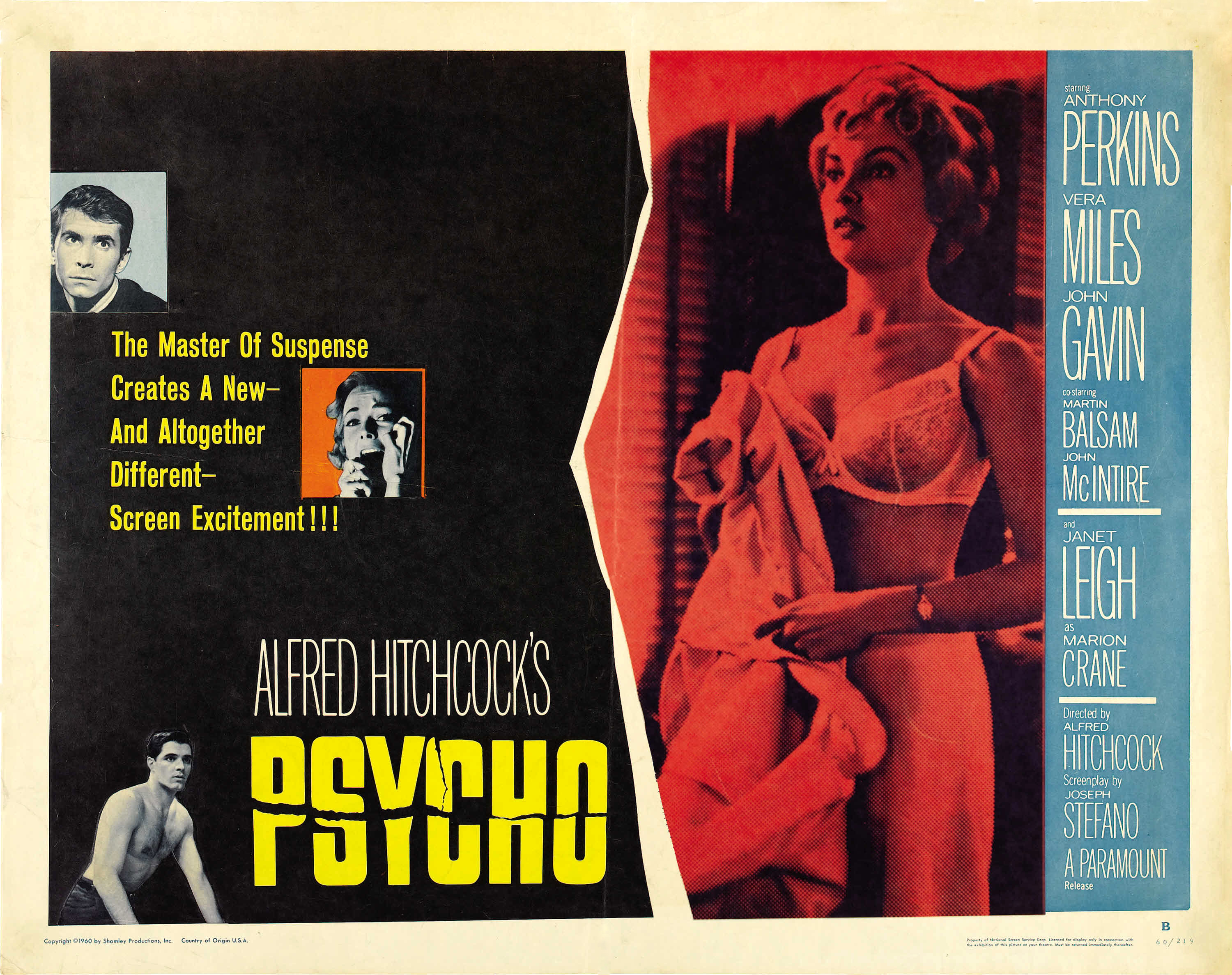
    Psycho is another primary film that i wanted to look at particular it's shower while it wont have a impact in my project it will inform my opinion on different ways to use sound

    How Does It Use Sound:

    One of the big takeaways from the shower scene is how much little sound is used, granted its set in a shower so not much sound could be used but its the subtle of it as it leads you into a false sense of security as the sound of the shower is quite relaxing and then the shadow appears behind the curtain but there's no sound so uncertainty.uneasiness kicks in. The sound remains relatively low until the curtain is tossed back and the iconic sound echoes out which due to its volume adds the scare and overcomes the audience. This is an effective use of sound in my mind particularly if you use it in a audio drama way as sounds the only cue they have so if you overwhelm it, it can be very effective


    Using sound in Film: Apocalypse Now


    When working on research i wanted to look at films that many look at as using sound effectively, and one of these that i put as primary research and many say use sound well is Apocalypse Now.

    How Does It Use Sound:

    Something that Francis Ford Coppola did with this film was to mix sounds in post production which caused dialogue and special effects to come out of different speakers this giving audience a new type of emersion and gives a sense of perspective. What this does for the audience is firstly tells them in relation to themselves where the characters are in the film, it also allows for the audience to know how far away the action is happening and from which direction the sound is coming from.

    Apocalypse Now was the first multi-channel movie to be mixed with a computerized mixing board. As both Walter Murch one of the most prominent sound designers in Hollywood and Coppola wanted the audience to feel like they were in a war-zone, surrounded by gunfire and bullets.Others also say this multi-channel “surround” style also works eerily well in the jungle sequences.


    Also one prominent sound that impacts most of the film is the sound of helicopters which Murch talks about here "It was something that came up long before the film ever got made — back when George [Lucas] was going to direct it. There was a lot of discussion between George and me, and between us and John Milius, who was writing the script, that what made Vietnam different and unique was that it was the helicopter war.....The beginning of the film was a trigger for the psychic dimension of the helicopters. Later on, when you get into the attack on the village [when Robert Duvall’s ramrod Col. Kilgore tries to clear a VC-held coastal town], it’s dramatic and it’s fantastic, but it is fairly much “what you see is what you hear.” Whereas at the beginning of the film it’s some drunken reverie of this displaced person, Willard, who is trying to bring himself back into focus." [http://designingsound.org/2009/10/walter-murch-special-apocalypse-now/]


    More info: https://soundandinteraction.wordpress.com/2011/10/10/the-sound-of-%E2%80%9Capocalypse-now%E2%80%9D/